Internal Medicine Residency
Our Program
The mission of our program is to cultivate expert compassionate internal medicine physicians who are deeply dedicated to promoting the health and well-being of their patients. Our program will endeavor to train residents to deliver safe, high-quality care to all the patients we serve, establishing lasting relationships with their colleagues and patients alike. We will remain focused on continuously raising our standard of excellence and will collaborate in our steadfast commitment to fostering a program that constantly reaches for and achieves improvement. Our program will model the highest standards of professionalism as we mentor and guide our residents to be fully prepared for success in whatever career endeavors they may ultimately choose.
- Residents will complete the majority of their training in community-based settings (Physicians Regional Hospital – Pine Ridge and Collier, their ambulatory networks, and private physicians’ offices) learning to work within a variety of team-based settings in suburban Florida.
- Residents will actively participate in and contribute to hospital and ambulatory clinic quality and process improvement initiatives to develop competency in practice-based learning, patient safety and quality improvement and systems-based practice.
- Residents will receive a balance of inpatient, outpatient and subspecialty experiences with the opportunity to individualize their clinical training experiences so as to maximize their skills in the specialty or subspecialty areas in which they intend to practice long-term.
Our Clinical Structure and Curriculum
Instead of structuring rotations as changing every month with a half-day of continuity clinic weekly, the program is taking a progressive approach, called an “X+Y Model.” The X+Y works within the constraints of the ACGME Internal Medicine requirements to separate the continuity clinic curriculum so that residents can be fully immersed in each rotational assignment. It allows, for example, a resident to work in the ICU for four weeks straight and never have to leave their critically ill patients to see patients in the clinic. Following those four weeks, they transition to the continuity clinic to begin a one-week rotation in outpatient medicine.
A Balanced Curriculum
The clinical training model is fairly evenly distributed between three types of learning – inpatient “bread and butter” medicine (ED, Hospital Medicine, ICU), outpatient medicine (continuity clinic), and individualized learning experiences (electives). Residents may select their own elective rotations throughout the course of their training. This provides residents the opportunity to sample different specialty areas in preparation for potential fellowship opportunities.
The planned clinical training structure for all residents is outlined below (keeping in mind that these are totals and do not reflect the 4+1 scheduling structure):
PGY-1
- Inpatient Medicine: 4 (four-week blocks)
- MICU: 2 (four-week blocks)
- Night Float: 1 (four-week block)
- Cardiology: 1 (four-week block)
- Emergency Medicine: 1 (four-week block)
- Continuity Clinic: 10 Weeks (in one-week blocks)
- Neurology: 1 (four-week block)
- Elective: 1 (four-week block)
PGY-2
- Inpatient Medicine: 2 (four-week blocks)
- MICU: 1 (four-week block)
- Medicine Consults for Ortho/Surg: 1 (four-week block)
- GI/Night Float: 1 (four-week block)
- Cardiology: 1 (four-week block)
- Continuity Clinic: 10 Weeks (in one-week blocks)
- Outpatient Medicine: 3 (four-week blocks)
- Elective: 2 (four-week blocks)
PGY-3
- Inpatient Medicine: 2 (four-week blocks)
- MICU: 1 (four-week block)
- Medicine Consults for Ortho/Surg: 1 (four-week block)
- GI/Night Float: 1 (four-week block)
- Cardiology: 1 (four-week block)
- Continuity Clinic: 10 Weeks (in one-week blocks)
- Elective: 4 (four-week blocks)
Continuity of Care
ED and admitted patients without a PCP will be recommended for post-discharge follow-up at the continuity clinic. On the ambulatory-side, residents will be in the clinic for one week at a time every four weeks. Residents will provide coverage for their colleagues’ patients while they are on clinic week.
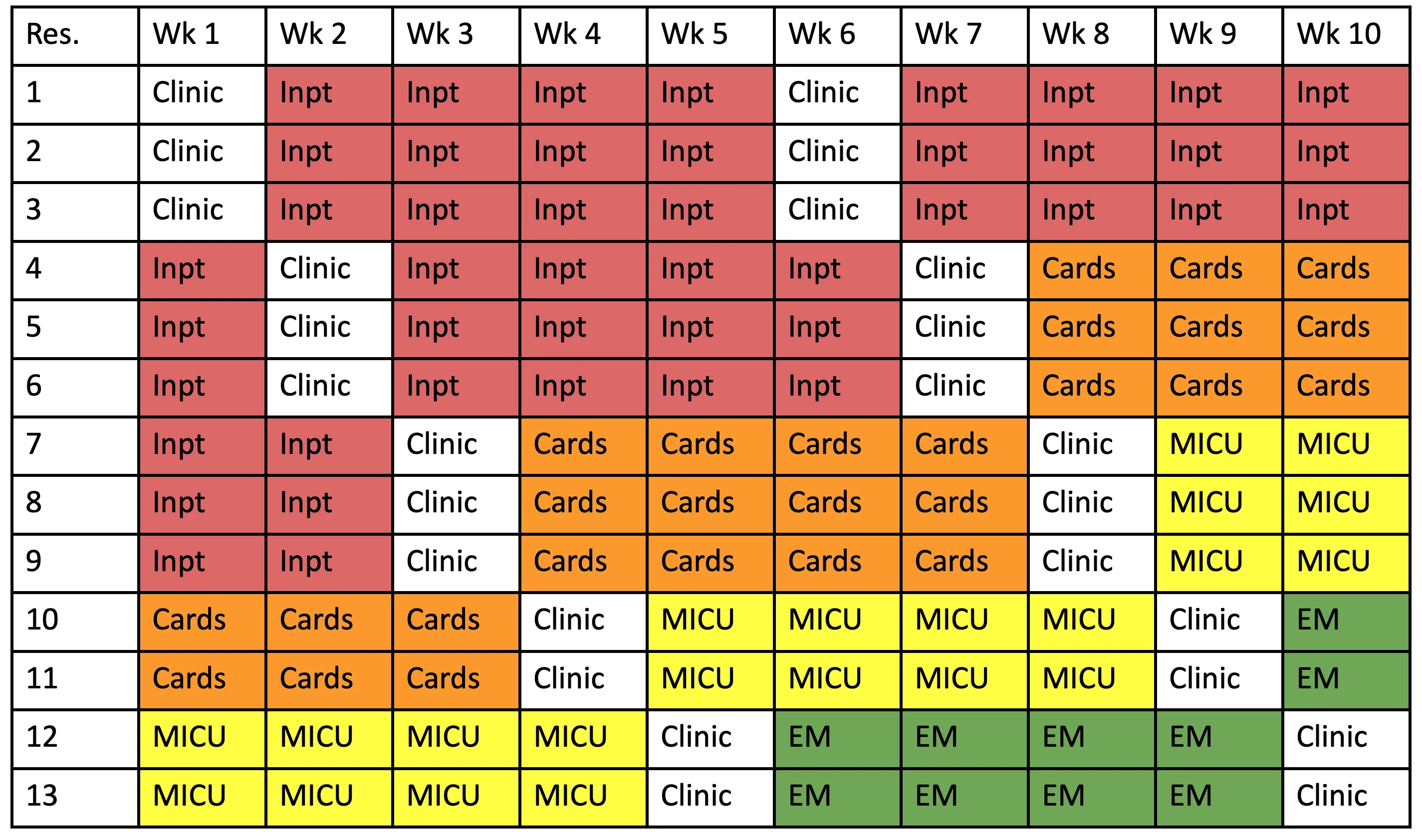
In the above example:
- Residents #1-3, #4-6, #7-9, #10-11, and #12-13 are always rotating into the continuity clinic at the same time. For example, they also are rotating into the same four-week experience but that won’t actually be the case very often.
- You can also see that as Residents #1-3 transition to the “clinic” rotation, Residents #4-6 are staying through (both week 1 and week 6) to conserve continuity of care in the inpatient setting. As Residents #4-6 transition to the “clinic” rotation, Residents #7-9 provide that continuity in week 1 and Residents #1-3 are back providing that continuity in week 7.
From the outpatient, continuity clinic perspective, the +1 week of continuity clinic experience is designed as a +1 week with residents assigned to the same “care team” for their entire training duration. When residents are on this +1 week, they will have no inpatient duties or responsibilities.
- Residents will be assigned to continuity clinic every fifth week. Once that pattern is established, it continues for the duration of training.
- Residents will spend five half-days during that week in clinic in direct patient care, in addition to one half-day of administrative time for clinic messages/refills/callbacks, one half-day for academics/research, one half-day for the program-wide academic half-day, one half-day in a subspecialty clinic, and one half-day for sim lab.
- It is during this time and this experience we anticipate that residents will develop a long-term therapeutic relationship with the patient panel they care for as the identified Primary Care Provider (PCP).
- When residents are switching into/out of the continuity clinic week, they will be trained to perform an outpatient hand-off to safely transition their patient panel’s treatment plan, including follow-up, to the next resident on the rotation.
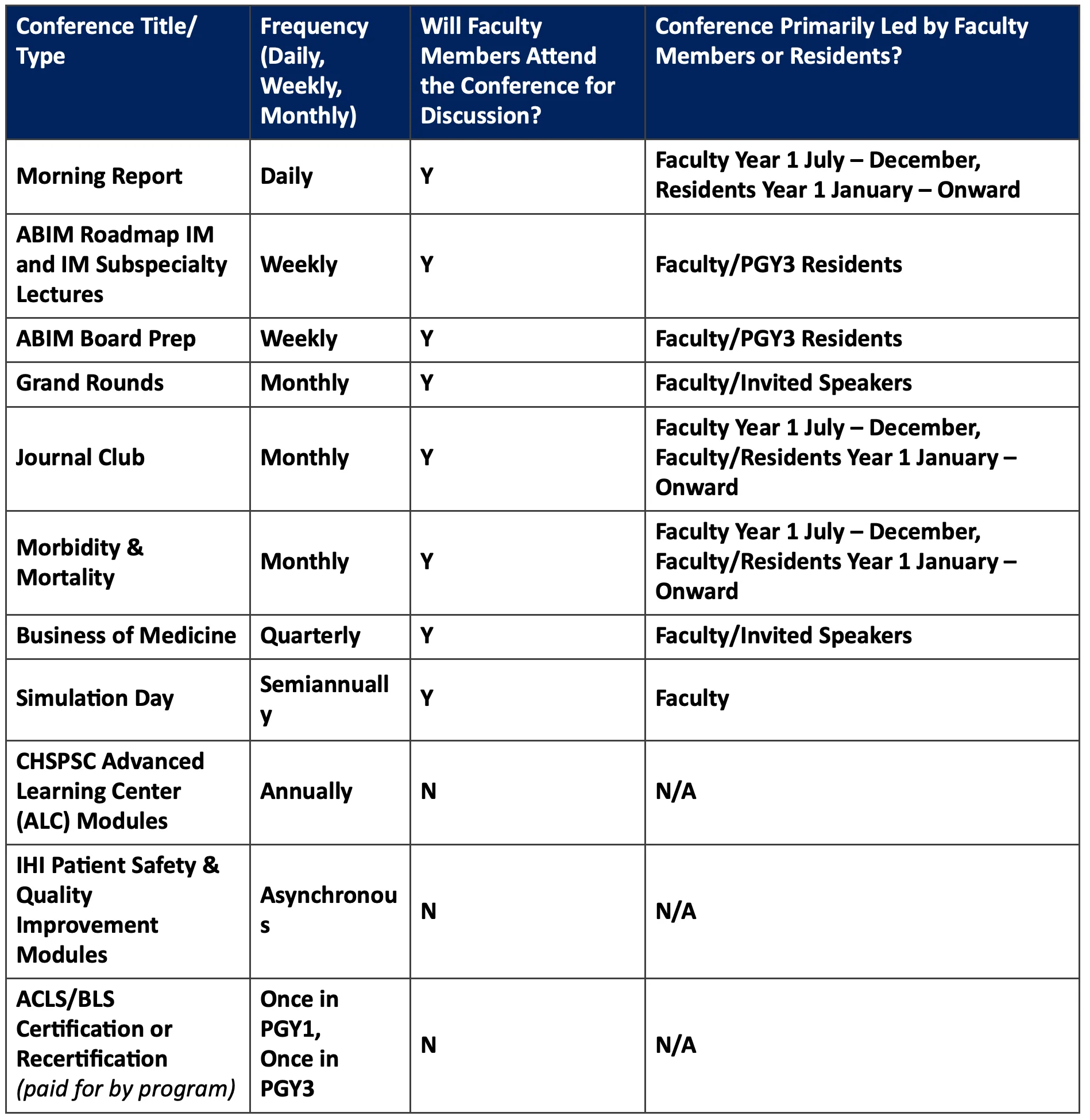
Didactics, Conferences & Simulation Offerings
Instead of daily noon conference, residents will be attending a weekly didactic half-day that includes a balance of topics and presenter mix, resident v. faculty. Topics will be balanced in proportion to the ABIM’s Blueprint to the Board Exam.
The ABIM Blueprint allows the program the ability to assure the specialty-specific lectures provided to residents along an 18-month recurring curriculum provide the highest probability of assuring the educational needs of residents are met for board prep.
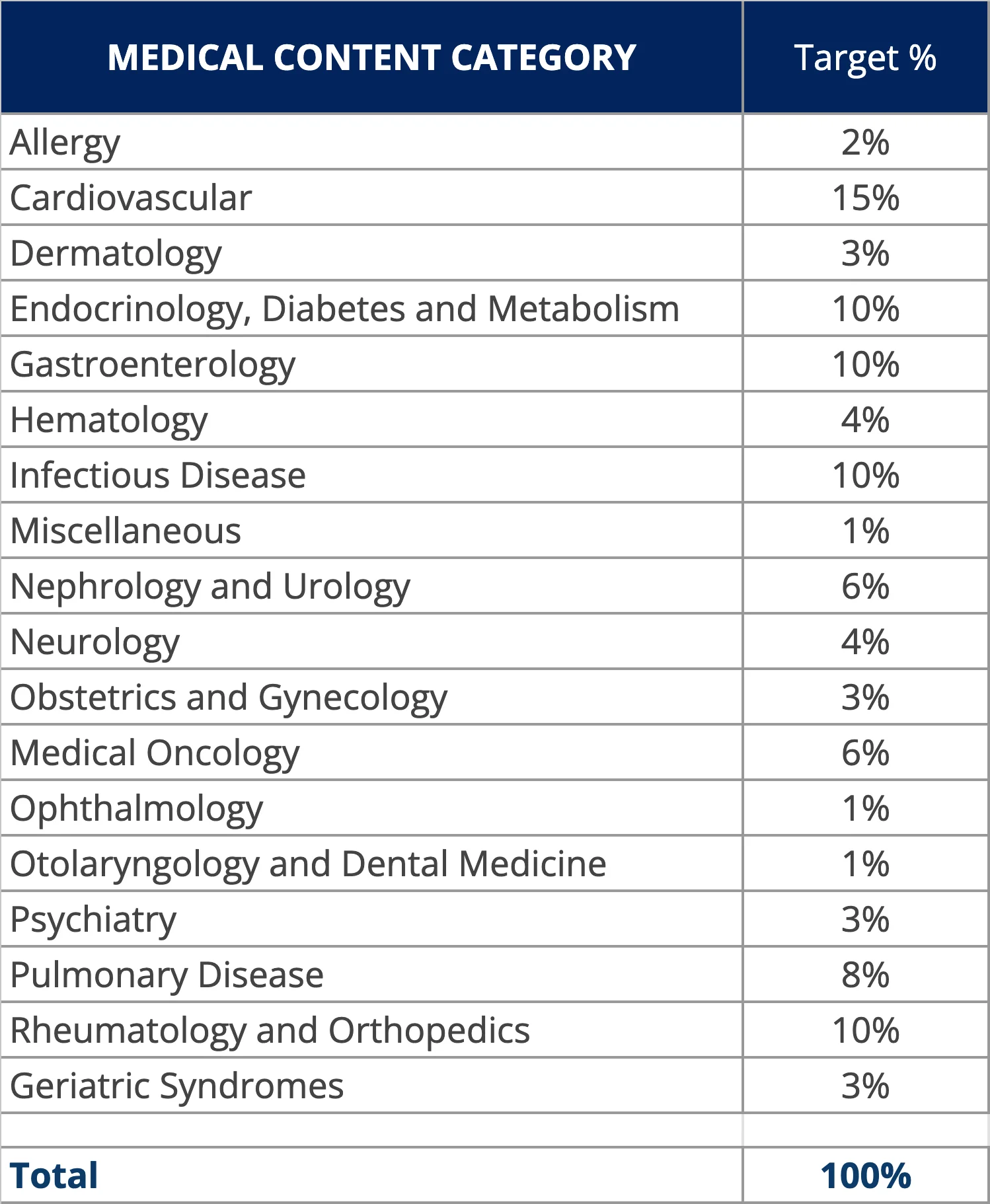
In addition to these topics, lectures will be given on social determinants of health, quality and process improvement, business of medicine, medical ethics, diversity and inclusion and other subjects determined needed and relevant by the Program Evaluation Committee.
Didactics will be in person, onsite at Physicians Regional Healthcare – Pine Ridge taking place weekly for one half-day.
Residents unable to attend can join virtually using Google Meet. Material related to all conferences such as journal articles; presentation material and handouts are stored in New Innovations under the Conference Module. Residents need only log in, navigate to the conference schedule and click the conference of interest to access, download and review the knowledge content they missed.
Scholarly Activity
The program requires residents to complete one quality improvement project and one case presentation by the end of training. They are also encouraged to participate in additional research under the guidance of their physician research director. This requirement and methods for satisfying it will be provided at Initial Appointment orientation. Residents are provided up to $3000 for conference attendance to span the three years of residency.